
Introduction
Protecting sensitive equipment in harsh conditions is less about convenience than risk control. MeiqiCase waterproof protective cases are designed for operations where impact, moisture, dust, and temperature swings can disable expensive tools and delay critical work. This article explains what makes these cases suitable for industrial, military, scientific, and field use, from material strength and sealing performance to transport reliability and long-term cost value. It also shows why the right enclosure matters when downtime, calibration loss, or environmental exposure can turn a single damaged device into a much larger operational and financial problem.
Why MeiqiCase Matters in Extreme Environments
In mission-critical industrial, military, and scientific operations, the physical integrity of sensitive equipment is paramount. High-value instrumentation, ranging from aerospace telemetry units to deep-sea acoustic sensors, requires robust containment solutions capable of withstanding severe environmental stressors. The deployment of a certified MeiqiCase serves as the primary line of defense against kinetic impact, moisture ingress, and extreme thermal fluctuations.
Engineered with advanced polymer science and rigorous structural geometry, these protective enclosures transition delicate hardware from fragile laboratory environments to unforgiving field operations. Understanding the fundamental engineering and economic rationale behind heavy-duty protective cases is essential for procurement officers and system integrators who must balance capital expenditure against the catastrophic risks of equipment failure.
Rising equipment value and downtime risk
The financial implications of hardware damage extend far beyond the replacement cost of the physical unit. In sectors such as offshore energy exploration or tactical military deployments, equipment downtime introduces cascading operational delays. Industry data indicates that unscheduled downtime in heavy industrial operations can incur costs ranging from $10,000 to over $50,000 per hour. When a highly calibrated $150,000 LiDAR scanner or a specialized medical diagnostic device is compromised during transit, the subsequent project paralysis often dwarfs the capital loss of the hardware itself.
Protective enclosures mitigate this risk by providing a predictable, controlled micro-environment during transit and storage. By absorbing kinetic energy that would otherwise shatter printed circuit boards or misalign optical arrays, these cases ensure that equipment arrives in a state of immediate operational readiness. The return on investment for a high-grade protective case is typically realized during its first critical deployment, transforming a potential catastrophic failure into a routine logistical event.
Use cases for waterproof protective cases
The operational versatility of these enclosures allows them to serve across a diverse spectrum of extreme environments. In maritime and oceanographic applications, equipment is routinely subjected to corrosive salt fog, high humidity, and potential submersion. Here, the deployment of an Expedition Ready Protective Storage Case ensures that delicate marine biology sampling kits or underwater drone control units remain completely isolated from saltwater intrusion.
Similarly, in aerospace and high-altitude deployments, cases must endure rapid atmospheric pressure changes and extreme temperature variations, often operating reliably in thermal conditions ranging from -40°C to +80°C. Other critical use cases include the transportation of emergency medical response equipment into disaster zones, the safeguarding of broadcast and cinematic lenses in desert environments characterized by fine silica dust, and the secure transit of cryptographic military hardware. In each scenario, the case acts not merely as a container, but as an active survival system for the gear inside.
Technical Criteria for MeiqiCase Waterproof Protective Cases
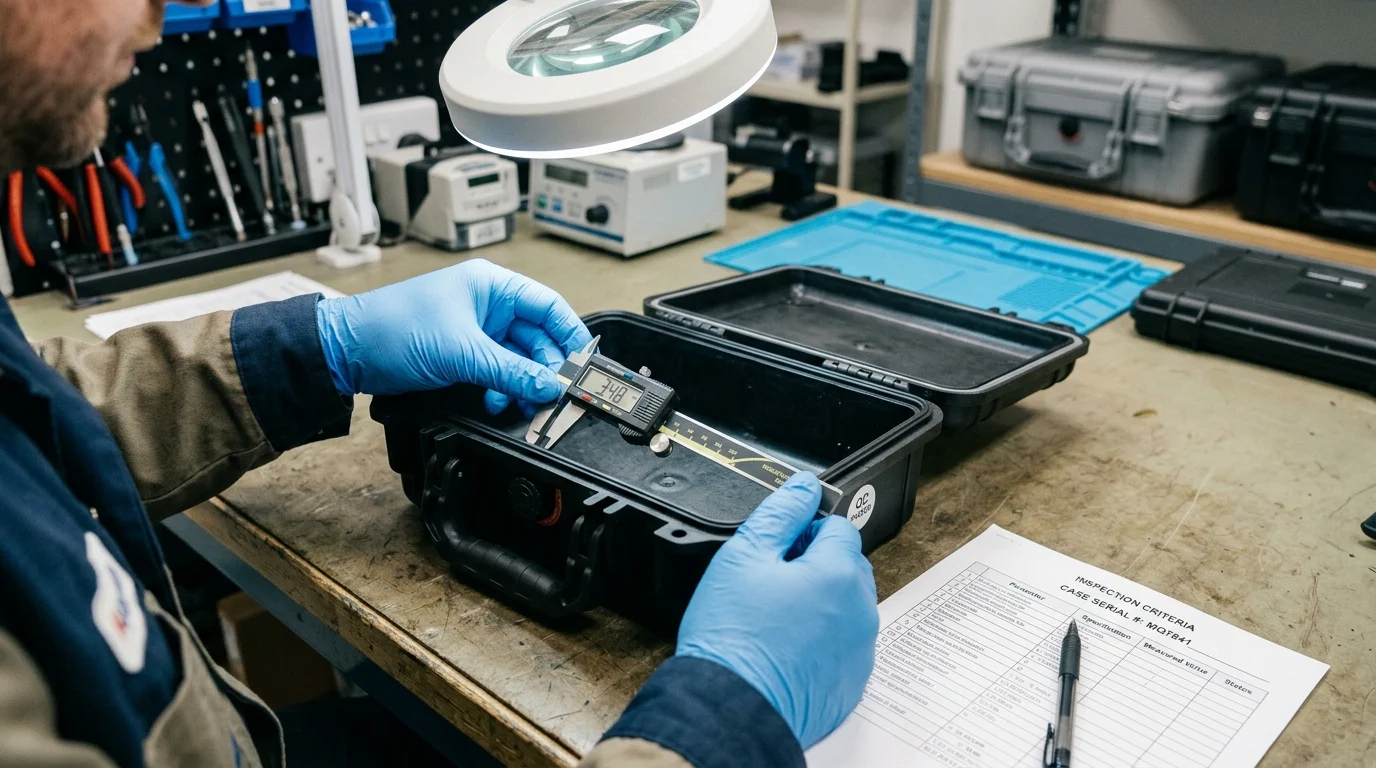
The efficacy of a protective enclosure is dictated by its underlying engineering and material specifications. A true Professional Gear Protective Transport System relies on a synergy of structural design, polymer chemistry, and precision manufacturing to achieve its protective ratings. Evaluating these technical criteria is crucial for engineers tasked with specifying enclosures for OEM equipment.
Sealing, impact resistance, and pressure equalization
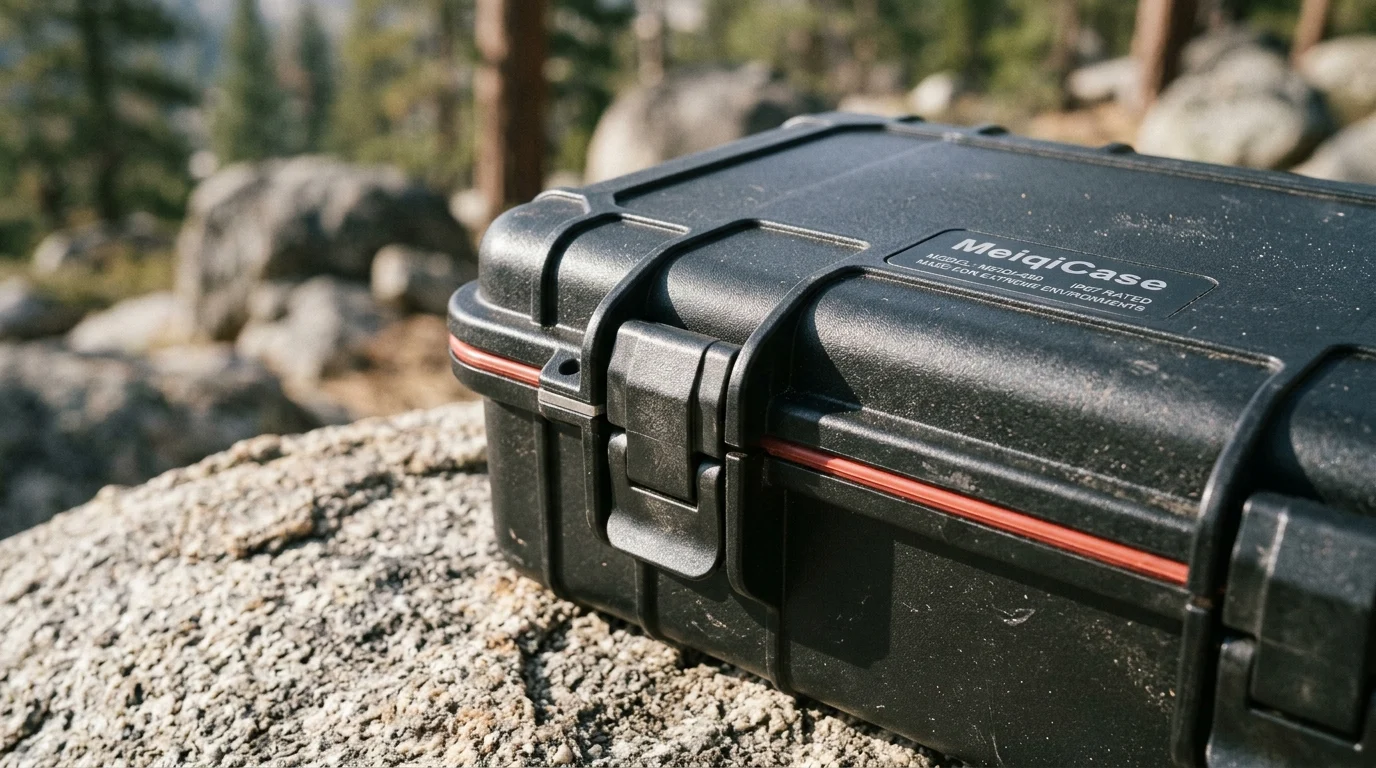
The fundamental requirement of an extreme-environment case is its ability to hermetically seal its contents from external elements. This is typically achieved through a continuous, replaceable O-ring constructed from EPDM (Ethylene Propylene Diene Monomer) or silicone, which compresses against a precise tongue-and-groove extrusion on the case lid. When properly secured, this mechanism routinely achieves an IP67 rating, guaranteeing complete protection against dust ingress and allowing for submersion in water at a depth of 1 meter for up to 30 minutes.
Impact resistance is driven by the use of proprietary polypropylene (PP) copolymer resins. Unlike standard injection-molded plastics that become brittle in sub-zero temperatures, these engineered copolymers maintain high tensile strength and elasticity, effectively dampening impact forces up to 40G. Furthermore, rapid changes in altitude or temperature can create a vacuum effect, sealing a watertight case shut. To counteract this, high-quality cases incorporate automatic pressure equalization valves utilizing ePTFE (expanded polytetrafluoroethylene) membranes. These microporous membranes allow air molecules to pass through, equalizing internal and external pressure, while their high surface tension completely repels water molecules.
Interior protection, load layout, and customization
While the exterior shell defends against penetration and weather, the interior layout is responsible for mitigating shock and vibration. Interior protection strategies range from standard pick-and-pluck polyurethane foam for end-users to highly engineered, custom-routed inserts for industrial applications. Polyethylene (PE) and Ethylene-Vinyl Acetate (EVA) foams are frequently utilized for heavy or highly sensitive equipment due to their superior load-bearing capabilities and resistance to chemical degradation.
Optimal load layout requires a minimum clearance of 10% to 15% between the equipment and the case walls to allow for adequate foam compression during an impact event. For advanced integrations, panel frames can be installed directly into the case, allowing electronic control panels to be mounted flush. This customization transforms a standard transport case into a fully functional, field-deployable command console or testing station, significantly enhancing operational efficiency.
Key comparison points for buyers
When specifying a protective case, procurement teams must evaluate several critical technical differentiators. The structural integrity of the latches, the robustness of the hinge pins, and the ergonomic design of the handles all contribute to the long-term viability of the product. The Meijia hard case profile, for instance, emphasizes reinforced corners and molded-in structural ribs to deflect impact energy away from the case’s center.
| Feature | Standard Commercial Case | High-Performance Copolymer Case |
|---|---|---|
| Material Base | Standard ABS or Polycarbonate | Copolymer Polypropylene Blend |
| Impact Rating | Low to Moderate (Prone to cracking) | High (Withstands 2-meter drop tests) |
| Thermal Tolerance | -10°C to +60°C | -40°C to +80°C |
| Pressure Valve | Manual screw-type or none | Automatic ePTFE membrane |
| Latch Mechanism | Single-stage tension | Double-throw (prevents accidental opening) |
By comparing these technical benchmarks, buyers can avoid under-specifying enclosures for critical applications, ensuring that the chosen solution aligns with the rigorous demands of their operational environments.
Compliance, Quality Assurance, and Lifecycle Value
Procuring protective enclosures for industrial or military applications requires more than assessing physical attributes; it demands rigorous validation through established compliance frameworks. Quality assurance protocols and certified testing standards provide the empirical data necessary to guarantee performance, while lifecycle value analysis justifies the initial capital expenditure over the lifespan of the deployed equipment.
Test standards and quality control documentation
To be qualified for extreme deployments, protective cases must undergo a battery of standardized tests. The most prominent of these is the MIL-STD-810G (or the newer 810H) specification, which outlines rigorous testing procedures for environmental engineering considerations. Cases are subjected to Method 516.6 for transit drop shock, Method 512.5 for immersion, and Method 506.5 for blowing rain. Compliance with the Air Transport Association (ATA) Specification 300, Category 1, further ensures the case can withstand a minimum of 100 airline shipments without functional degradation.
For an OEM Equipment Protective Storage Case, stringent quality control documentation is mandatory. Manufacturers must provide First Article Inspection (FAI) reports and maintain strict traceability of polymer batches. Leading facilities operate under ISO 9001:2015 standards, maintaining an aggregate defect rate below 0.05% (500 Parts Per Million). Additionally, materials must adhere to RoHS (Restriction of Hazardous Substances) and REACH directives, ensuring the cases are free from restricted heavy metals and toxic compounds, which is particularly critical for medical and food-grade deployments.
Durability, maintenance, and replacement cycles
The lifecycle value of a premium waterproof case is heavily influenced by its durability and the simplicity of its maintenance. A well-engineered copolymer case is designed for a functional lifespan of 10 to 15 years, often outlasting the technological relevance of the equipment it protects. However, while the exterior shell boasts immense longevity, internal components require periodic assessment.
Maintenance cycles primarily involve the inspection and lubrication of the EPDM O-rings every 12 to 24 months to prevent dry rot and maintain the IP67 hermetic seal. Similarly, polyurethane foam inserts may experience compression set or degradation over 3 to 5 years of heavy use and require replacement. Factoring in these minor maintenance costs against a 15-year operational lifespan demonstrates a highly favorable Total Cost of Ownership (TCO), especially when weighed against the catastrophic cost of a single unprotected equipment failure.
Procurement, Logistics, and Deployment Planning
Transitioning from the selection of a protective case to large-scale deployment involves complex logistical coordination. For OEMs integrating cases into their product Bill of Materials (BOM), and for industrial buyers outfitting entire fleets, efficient procurement and supply chain management are critical to controlling costs and ensuring timely delivery.
Specification planning for OEM and industrial buyers
Specification planning begins with precise dimensional analysis. OEM engineers must provide 3D CAD models of their equipment to case manufacturers to facilitate the design of custom CNC-routed or molded foam interiors. Dimensional tolerances for these custom inserts are typically held to a rigorous ±2mm to ensure a secure, friction-fit without placing undue stress on fragile components.
Procurement officers must also navigate Minimum Order Quantities (MOQs) and lead times. While off-the-shelf black cases may have MOQs as low as 50 units, requesting custom pantone color matching or specialized anti-static (ESD) foam often pushes MOQs to a range of 100 to 500 units. Lead times for custom tooling and initial production runs can span 6 to 8 weeks, necessitating accurate demand forecasting to prevent bottlenecks in the OEM’s final product assembly line.
Packaging, freight, warehousing, and fulfillment
The logistics of transporting protective cases present unique challenges, primarily because the shipments consist largely of encapsulated air. To optimize freight costs, procurement teams must analyze the nesting capabilities and palletization efficiency of the selected case models. High-quality cases feature molded-in stacking ribs that interlock with the base of the case above them, allowing for stable vertical columns. A standard industrial model is typically rated for a dynamic stacking load capacity of up to 250kg per case, ensuring stability during turbulent sea freight or rough overland transit.
Warehousing strategies must account for the volumetric footprint of the cases. Fulfillment operations often utilize a Just-In-Time (JIT) delivery model, where the case manufacturer holds the bulk inventory and dropships smaller, staggered quantities to the OEM’s assembly facility. This minimizes the OEM’s warehousing overhead while ensuring a continuous supply of protective enclosures synchronized with their equipment production schedules.
How to Choose the Right MeiqiCase
Selecting the optimal protective enclosure is a strategic exercise that requires balancing physical dimensions, environmental threats, and budget constraints. A systematic approach ensures that the chosen case provides uncompromised protection without incurring unnecessary costs associated with over-specification.
Step-by-step case selection process
The selection process begins with volumetric calculation. Measure the maximum length, width, and depth of the equipment, and add a mandatory clearance zone of 25mm to 50mm on all sides to accommodate shock-absorbing foam. Next, define the primary environmental threats: will the case face deep-water submersion, requiring an IP68 rating, or merely rain and dust, where IP67 is sufficient? Finally, the interior configuration must be chosen based on the weight and fragility of the payload.
| Foam Type | Density Range | Optimal Application | Relative Cost |
|---|---|---|---|
| Polyurethane (PU) | 15 – 25 kg/m³ | Lightweight electronics, optics | Low |
| Polyethylene (PE) | 20 – 35 kg/m³ | Medium weight tools, medical gear | Medium |
| Ethylene-Vinyl Acetate (EVA) | 30 – 45 kg/m³ | Heavy industrial parts, custom routing | High |
| Expanded Polypropylene (EPP) | 40 – 60 kg/m³ | High-impact military drops, reusable | Very High |
By utilizing this matrix, engineers can match the density and compression characteristics of the foam to the specific kinetic energy profile of their equipment, ensuring maximum survivability during transit.
Signals of a strong product fit
Identifying a strong product fit goes beyond matching dimensions on a spec sheet. A premium protective case solution is signaled by the manufacturer’s willingness to provide comprehensive testing data, material safety data sheets (MSDS), and a robust, ideally lifetime, warranty on the exterior shell. Furthermore, the availability of easily replaceable modular components—such as field-replaceable latches, handles, and wheels—indicates a product designed for sustainable, long-term industrial use.
Ultimately, the right enclosure acts as a seamless extension of the equipment it protects. When extreme temperature resilience, uncompromising watertight integrity, and precise shock mitigation align with the operational requirements, the protective case ceases to be a mere accessory. It becomes an integral, indispensable component of the mission’s success, safeguarding capital investments and ensuring operational continuity in the world’s most unforgiving environments.
Key Takeaways
- The most important conclusions and rationale for MeiqiCase
- Specs, compliance, and risk checks worth validating before you commit
- Practical next steps and caveats readers can apply immediately
Frequently Asked Questions
What waterproof rating do MeiqiCase protective cases offer?
Many MeiqiCase models are built to IP67 standards, blocking dust and handling water submersion up to 1 meter for 30 minutes when properly latched and sealed.
How do MeiqiCase cases handle pressure changes during air or high-altitude transport?
They use automatic pressure equalization valves that balance internal and external pressure while helping keep water out, making opening easier after altitude changes.
What kinds of equipment are MeiqiCase waterproof cases best suited for?
They are ideal for sensitive gear like drones, LiDAR units, marine instruments, medical devices, lenses, and tactical electronics used in harsh field conditions.
Can I customize the inside of a MeiqiCase for my equipment?
Yes. MeiqiCase offers interior protection options to secure specific gear layouts, helping reduce movement, shock damage, and setup time during transport.
Why choose MeiqiCase from meiqicase.com for extreme environments?
MeiqiCase focuses on rugged protective boxes designed for impact, dust, moisture, and temperature stress, helping reduce downtime and protect high-value equipment in the field.
Post time: May-23-2026