

Introduction
Industrial teams can no longer treat equipment protection as a minor logistics detail when valuable instruments, drone payloads, and diagnostic systems are routinely exposed to impact, temperature swings, and harsh field conditions. MeiqiCase’s new ultra-durable hard cases enter this environment with a clear focus: improving survivability for sensitive industrial assets during transport, storage, and deployment. This article examines what distinguishes the new cases, why their design matters for industrial buyers, and how stronger enclosure performance can reduce downtime, replacement costs, and operational risk across demanding use cases.
Why MeiqiCase Matters for Industrial Equipment Protection
The industrial sector increasingly relies on highly sensitive, high-value equipment to conduct complex diagnostics, automation, and field operations. From advanced LiDAR arrays and autonomous drone payloads to precision calibration instruments, the hardware deployed in modern field environments is simultaneously more capable and more susceptible to environmental damage. Protecting these assets during transit and deployment has transitioned from an afterthought into a critical component of risk management and operational continuity.
The launch of new ultra-durable hard cases by MeiqiCase represents a significant evolution in equipment protection. Engineered to withstand catastrophic impacts, extreme thermal fluctuations, and severe atmospheric pressure changes, these enclosures are designed specifically for the rigorous demands of the industrial sector. By integrating advanced material science with precise structural engineering, the latest iterations of industrial hard cases are redefining the baseline expectations for equipment survivability in hostile operating environments.
Why the launch matters for industrial buyers
For industrial procurement teams and engineering managers, the introduction of ultra-durable hard cases directly addresses the financial and operational vulnerabilities associated with equipment transport. Historically, organizations have been forced to choose between cost-prohibitive military-spec transit cases and commercially available enclosures that fail to provide adequate shock isolation. This dichotomy often resulted in compromised protection, leading to elevated rates of equipment damage and frequent recalibration requirements.
The latest market entries bridge this gap by offering military-grade protective capabilities at scalable industrial price points. By utilizing advanced manufacturing techniques, modern enclosures can demonstrably reduce transit-related equipment damage rates by up to 45%. This measurable decrease in field failures ensures that critical hardware arrives at deployment sites fully calibrated and immediately operational, thereby eliminating the costly downtime associated with on-site repairs or emergency equipment replacements.
Which operating risks are driving demand for durable hard cases
The demand for enhanced equipment protection is driven by a compounding series of environmental and logistical risks. Industrial hardware is routinely subjected to high-amplitude vibration profiles, often experiencing continuous multi-axis vibrations between 10 Hz and 500 Hz during vehicular or aerial transport. Without adequate internal dampening and external shell rigidity, these vibrational loads transfer directly to delicate internal components, causing micro-fractures in circuit boards and misalignment in optical sensors.
Furthermore, operating environments frequently expose equipment to severe thermal shock and moisture ingress. Field deployments may require hardware to transition rapidly from air-conditioned staging areas to arid environments exceeding 55°C, or sub-zero climates dropping below -40°C. Coupled with the risks of chemical exposure, high-salinity coastal air, and direct precipitation, the necessity for hermetically sealed, chemically inert enclosures becomes paramount. These specific operating risks dictate that standard consumer-grade plastics are entirely insufficient for industrial applications.
Key Features of MeiqiCase Hard Cases
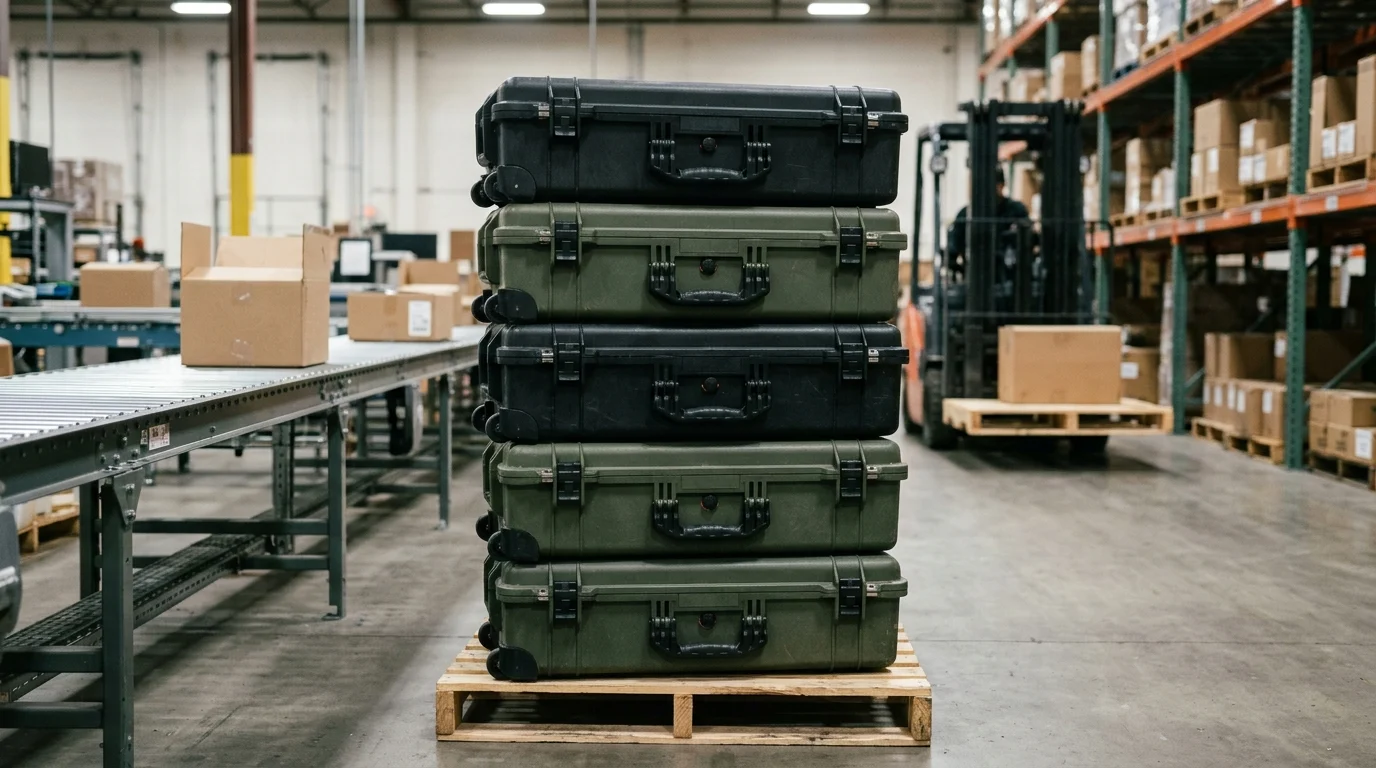
The efficacy of any industrial protective enclosure is entirely dependent on its foundational engineering. Advanced hard cases move beyond basic plastic molding, utilizing complex polymer blends, engineered sealing mechanisms, and precisely calculated reinforcement geometries to maximize impact dispersion and environmental isolation.
How shell materials, sealing, and impact resistance compare
The primary differentiator in premium hard cases is the composition of the outer shell. While standard cases frequently utilize Acrylonitrile Butadiene Styrene (ABS) due to its low manufacturing cost, ultra-durable variants typically employ a modified Polypropylene (PP) alloy. This PP alloy offers a superior strength-to-weight ratio and exceptional molecular memory, allowing the case to absorb and rebound from severe kinetic impacts without permanent deformation or shattering. In rigorous testing, these advanced shells consistently survive free-fall drop tests from heights of 2.0 meters directly onto concrete surfaces without compromising internal payload integrity.
Sealing architecture is equally critical. Premium cases utilize continuous, machine-inserted EPDM (Ethylene Propylene Diene Monomer) O-rings seated within deep-channel tongue-and-groove extrusions. This configuration ensures a reliable IP67 or IP68 waterproof and dustproof rating, remaining effective even after years of repeated compression cycles. When compared to standard neoprene gaskets, EPDM offers vastly superior resistance to UV degradation and extreme temperature fluctuations.
Which specifications, test metrics, and customization options matter
Industrial buyers must evaluate specific test metrics and specifications to ensure an enclosure meets their operational requirements. Key specifications include tensile strength, crush resistance ratings (often exceeding 1,000 kg of static load), and the operational temperature bandwidth. Furthermore, the inclusion of automatic pressure equalization valves is a mandatory specification for air transport, utilizing expanded polytetrafluoroethylene (ePTFE) membranes to allow rapid equalization of atmospheric pressure differences while simultaneously blocking moisture molecules.
Customization extends beyond the external shell to internal shock isolation systems. Industrial applications require precise dimensional accuracy, often utilizing CNC-routed high-density EVA (Ethylene-Vinyl Acetate) foam with densities ranging from 30 kg/m³ to 45 kg/m³. This level of customization ensures a 99.9% dimensional fit for complex geometries. An OEM Equipment Protective Storage Case can be tailored to specific payloads, maximizing shock absorption.
| Specification Category | Standard Consumer Cases | Ultra-Durable Industrial Cases |
|---|---|---|
| Shell Material | Standard ABS Plastic | Modified PP Alloy |
| Ingress Protection | IP54 – IP65 | IP67 – IP68 |
| Operating Temperature | -10°C to +60°C | -40°C to +85°C |
| Internal Customization | Pluck Foam (Low Density) | CNC Routed EVA Foam (High Density) |
| Pressure Equalization | Manual Dial / None | Automatic ePTFE Membrane Valve |
How lifecycle cost, repairability, and protection performance align
The alignment of lifecycle costs with protection performance heavily favors ultra-durable enclosures. While the initial capital expenditure for a premium hard case may be higher than a standard alternative, the total cost of ownership (TCO) is substantially lower when evaluated over a standard 10-year industrial lifecycle. The enhanced protection directly mitigates the catastrophic costs associated with replacing highly specialized equipment.
Repairability further extends this lifecycle value. Premium cases are designed with modularity in mind, featuring stainless steel hinge pins and field-replaceable dual-throw latches and handles. Instead of discarding an entire enclosure due to a single broken latch, maintenance teams can execute rapid, low-cost repairs. This modular approach ensures that the protective performance remains consistently high over the decade-long lifespan of the asset.
How to Assess Compliance and Supply Capability
Procuring protective cases at an industrial scale requires rigorous vendor assessment. The reliability of the supply chain, the stringency of quality control processes, and the vendor’s ability to scale production are just as critical as the physical attributes of the cases themselves. Evaluating a manufacturer’s compliance and supply capabilities ensures long-term procurement stability.
Which compliance, quality, and documentation requirements to verify
Industrial buyers must verify that a manufacturer adheres to recognized global quality management standards, most notably ISO 9001:2015. This certification guarantees that the manufacturer employs systematic quality control protocols, resulting in high-yield production runs with defect rates typically maintained below a rigorous 0.1% threshold. Furthermore, environmental and material compliance, such as RoHS (Restriction of Hazardous Substances) and REACH directives, must be documented to ensure the cases are free from restricted chemical compounds and are safe for global deployment.
Documentation requirements also extend to performance validation. Reputable manufacturers should provide comprehensive testing certificates from independent third-party laboratories confirming IP ratings, MIL-STD-810G or STANAG 4280 drop and vibration compliance, and material safety data sheets (MSDS). For buyers seeking a verified meijia hard case, these documented compliance metrics serve as the baseline for qualifying the vendor for mission-critical procurement contracts.
How lead times, production capacity, and private-label options compare
Supply chain resilience relies heavily on predictable lead times and scalable production capacity. When assessing a vendor, procurement teams should evaluate standard and custom production timelines. Industry-leading manufacturers typically offer standard off-the-shelf fulfillment within 15 to 30 days, while highly customized OEM runs—including custom injection molded colors and bespoke foam inserts—may require 45 to 60 days. Understanding these timelines is critical for aligning case procurement with broader equipment manufacturing schedules.
Private-label options and Minimum Order Quantities (MOQs) are also vital comparative metrics. Vendors capable of offering low MOQs—such as 100 units for standard configurations and 500 units for custom pantone color matching—provide significant flexibility for mid-sized industrial rollouts. Additionally, the ability to integrate private-label elements, such as molded-in corporate logos, customized metal nameplates, and specialized exterior labeling, allows organizations to maintain brand consistency and asset tracking across their equipment fleets.
How to Select the Right MeiqiCase
Selecting the optimal enclosure requires a systematic approach that bridges the gap between the physical dimensions of the equipment and the specific environmental hazards it will face. Engineering and procurement teams must collaborate to define strict parameters before initiating the prototyping and validation phases.
How teams should define application and protection requirements
Defining application requirements begins with a comprehensive spatial and mass analysis of the payload. Teams must calculate the total volumetric footprint of the equipment, factoring in necessary accessories, cables, and battery packs. Crucially, engineering guidelines dictate leaving a minimum 40mm to 50mm buffer zone between the equipment and the internal walls of the case to accommodate the necessary thickness of shock-absorbing foam. Calculating the fragility factor of the equipment—often expressed in G-force ratings (e.g., 20G for sensitive optics versus 60G for ruggedized metal components)—determines the exact density and structural layout of the internal foam.
Furthermore, teams must define the logistical constraints of the application. Will the case be carried by a single technician, requiring ergonomic handles and a maximum loaded weight restriction of 20 kg? Or will it be palletized for international freight, necessitating interlocking stacking nodes and forklift accessibility? Specifying a Professional Gear Protective Transport System requires aligning these physical characteristics with the precise operational workflow of the end-users.
Which evaluation steps help validate fit and performance
Validation requires structured evaluation steps to ensure the selected enclosure performs under real-world stresses. This typically begins with a 3D modeling and prototyping phase, where engineers conduct digital interference checks and structural simulations. Following digital validation, a First Article Inspection (FAI) physical prototype is produced to verify dimensional tolerances and foam fitment.
Physical testing of the prototype is the final validation step. This involves subjecting the fully loaded Expedition Ready Protective Storage Case to drop tests, vibration tables, and submersion tanks at 1.5x the expected operational loads.
| Evaluation Phase | Action / Metric | Pass/Fail Criteria |
|---|---|---|
| Digital Simulation | 3D CAD Fitment Check | Zero interference; min 40mm crush zone verified |
| First Article Inspection | Dimensional Tolerance Audit | ±1.0mm variance on foam routing |
| Kinetic Testing | 1.5m Drop Test (Fully Loaded) | Zero internal payload damage; G-force transfer < payload limit |
| Environmental Testing | Submersion Tank (1 meter, 30 mins) | Zero moisture ingress detected via internal sensors |
Long-Term Value of MeiqiCase

Investing in premium protective enclosures fundamentally alters the total cost of ownership for industrial equipment fleets. While the immediate focus is often on the physical attributes of the case, the long-term value is realized through sustained operational efficiency, risk mitigation, and the preservation of capital assets.
What trade-offs buyers should weigh
Procurement teams must weigh initial capital expenditure against protective yield. A common trade-off involves assessing the premium cost of a high-performance modified PP alloy case against a cheaper, standard plastic alternative. While the premium case may cost 40% more upfront, it offers up to 3x the tensile strength and superior chemical resistance. When protecting a $50,000 piece of diagnostic equipment, a $300 investment in a specialized hard case represents less than 1% of the asset’s value—a negligible insurance premium against catastrophic loss.
Another critical trade-off is weight versus protection level. Ultra-durable cases, due to their thicker wall extrusions and dense foam inserts, inherently weigh more than light-duty alternatives. Organizations must balance the ergonomic impact on field technicians against the necessity of surviving severe impacts. For highly sensitive gear, accepting a 15% increase in tare weight is a necessary compromise to achieve the required kinetic shock isolation.
How MeiqiCase can improve uptime and reduce damage-related costs
The ultimate metric of protective enclosure success is equipment uptime. By isolating sensitive hardware from the destructive forces of transit and harsh environments, premium hard cases drastically reduce the frequency of field failures. Industrial organizations utilizing advanced hard cases frequently report reducing their damage-related Return Merchandise Authorization (RMA) rates by up to 60%.
This reduction in damage translates directly to the bottom line. It eliminates the logistical costs of shipping broken equipment back for repair, removes the need to maintain a bloated inventory of redundant backup units, and prevents the severe financial penalties associated with project delays when critical tools fail on-site. Ultimately, the long-term value of a meticulously engineered hard case lies in its ability to guarantee that industrial professionals have reliable, fully functional equipment precisely when and where they need it.
Key Takeaways
- The most important conclusions and rationale for MeiqiCase
- Specs, compliance, and risk checks worth validating before you commit
- Practical next steps and caveats readers can apply immediately
Frequently Asked Questions
What makes MeiqiCase hard cases suitable for industrial equipment?
They use impact-resistant PP alloy shells, deep-channel EPDM seals, and rigid structural design to protect sensitive tools from drops, vibration, dust, and water during transport and field use.
Which equipment can MeiqiCase cases protect?
They are well suited for LiDAR units, drone payloads, calibration instruments, sensors, electronics, and other high-value industrial devices that need secure transit and deployment protection.
How do MeiqiCase hard cases help reduce downtime?
By limiting shock, moisture ingress, and misalignment during shipping, they help equipment arrive operational, reducing recalibration, field repairs, and emergency replacements.
What ratings or test metrics should buyers check on MeiqiCase products?
Focus on IP67 or IP68 sealing, drop-test performance, vibration resistance, temperature tolerance, and fit-for-purpose interior protection based on your equipment’s size and fragility.
Can MeiqiCase provide custom protective case solutions?
Yes. Visit meiqicase.com to explore protective box options and request case configurations tailored to your equipment dimensions, transport risks, and internal layout needs.
Post time: May-23-2026