
Introduction
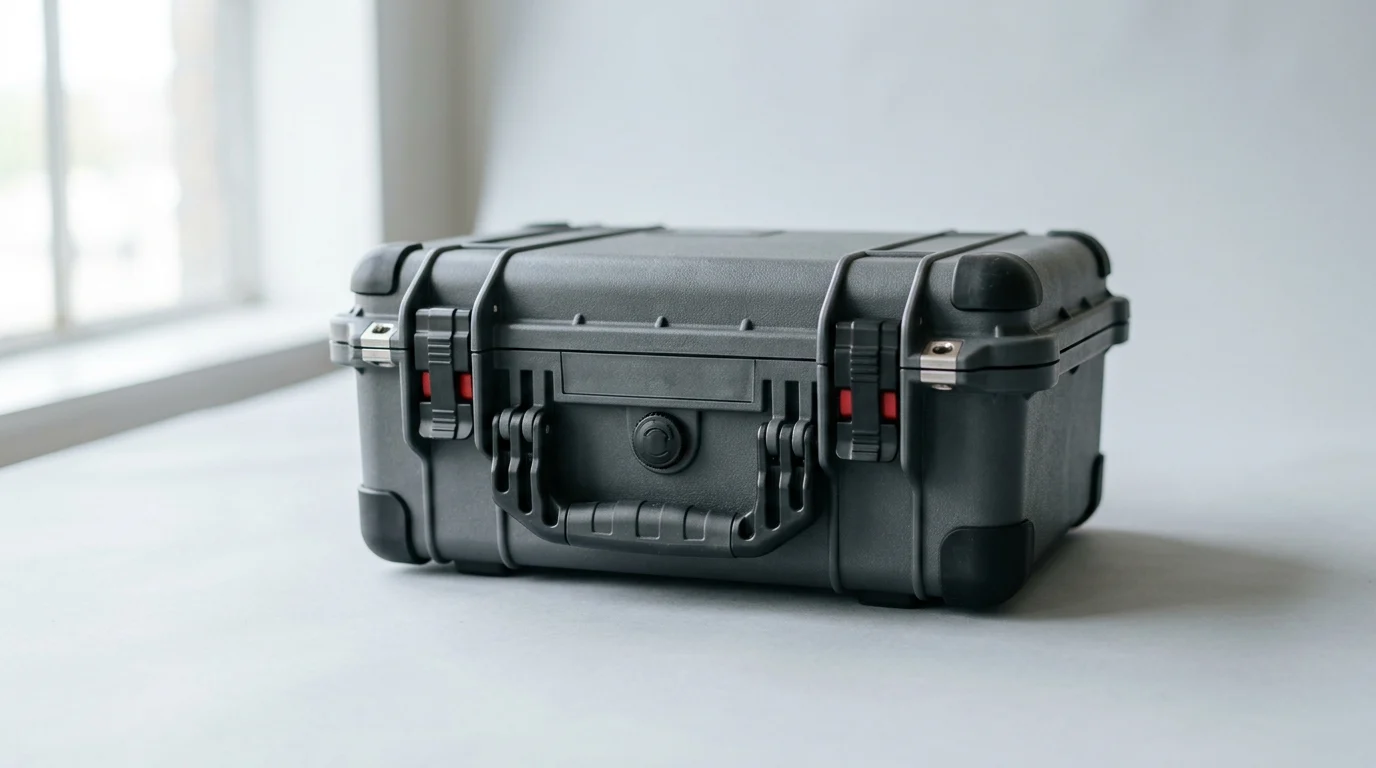
For trade professionals, storage affects far more than tidiness: it influences tool readiness, equipment lifespan, and the amount of productive work completed each day. Protective box systems built for transport, impact resistance, and organized access can reduce delays caused by damaged gear, misplaced tools, and inefficient vehicle layouts. MeiqiCase tool boxes stand out in this shift by combining protection with workflow control, helping crews move from transit to task with less friction. The discussion ahead explains how these protective enclosures improve efficiency across vehicles, jobsites, and workshops, and why better storage design can translate directly into lower downtime and stronger operational performance.
How Protective Box Systems Improve Trade Efficiency
In modern trade and industrial operations, the management of specialized equipment directly impacts project profitability and operational timelines. A high-quality Protective Box is no longer merely a storage vessel; it is an active component in workflow optimization. By securing sensitive diagnostic devices, heavy-duty power tools, and calibrated instruments against environmental and physical hazards, these engineered enclosures prevent costly downtime. MeiqiCase tool boxes represent a critical shift in this paradigm, transforming chaotic equipment transport into a streamlined, highly reliable process.
Industry analyses indicate that disorganized tool storage and equipment damage can result in a daily labor loss of 45 to 60 minutes per technician. When multiplied across a fleet of service vehicles or a large-scale jobsite, this inefficiency significantly erodes profit margins. Implementing a standardized protective enclosure system mitigates these losses by ensuring that tools are immediately accessible, properly inventoried, and fully functional upon deployment.
Key Jobsite, Vehicle, and Workshop Challenges
The environments in which trade professionals operate are inherently hostile to sensitive electronics and precision mechanics. During transit, vehicles routinely subject equipment to vibration profiles exceeding 5G forces and shock impacts up to 50G. Without adequate isolation, these forces cause calibration drift in measurement tools and mechanical failure in motor-driven equipment.
Furthermore, jobsites expose equipment to severe environmental variables. Fluctuating temperatures can lead to internal condensation, while fine particulate matter, such as silica dust from concrete cutting, easily penetrates standard storage solutions. An unsealed case leaves high-value assets vulnerable to moisture, leading to oxidation and electrical shorts. A properly engineered Equipment Shipping Protective Transit Case addresses these exact challenges through hermetic sealing and impact-absorbing internal architectures, ensuring survival in environments with 95% relative humidity or extreme dust exposure.
Why Protective Box Design Affects Productivity
The structural design of a protective enclosure dictates the speed and efficiency with which a technician can operate. Ergonomics play a substantial role; latches that require excessive force or fail under debris accumulation slow down tool retrieval. Conversely, dual-throw latches and pressure equalization valves allow for rapid, one-handed operation even when wearing heavy work gloves or after significant altitude changes during air freight.
Interior organization is equally critical to productivity. Shadow boarding through custom-routed EVA foam ensures that every tool has a designated position. This not only accelerates the retrieval process by up to 35% but also facilitates instant visual inventory checks at the end of a shift, drastically reducing the rate of lost or left-behind equipment. The integration of modular stacking systems further enhances productivity by allowing technicians to transport multiple cases vertically on a single dolly, reducing the number of trips required from the vehicle to the workspace.
What Defines a High-Performance Protective Box
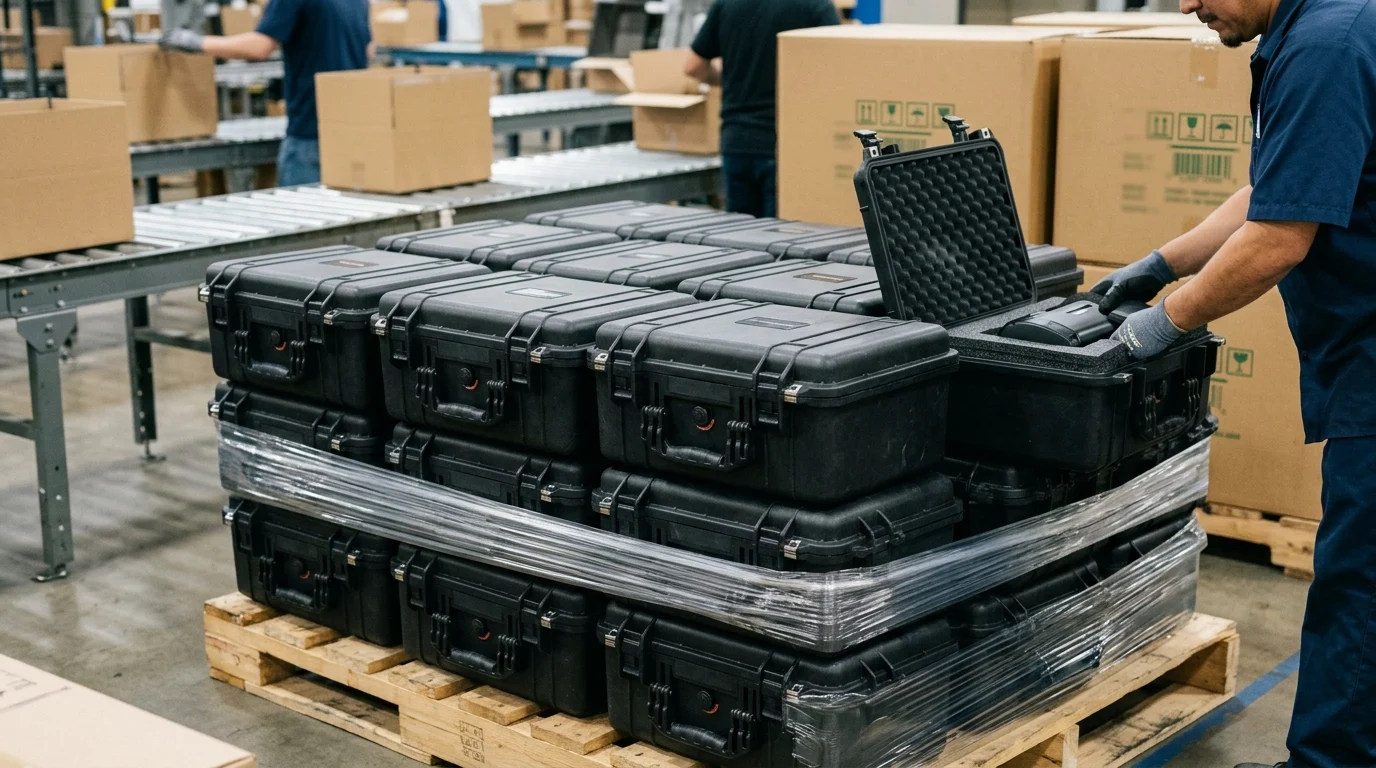
Defining a high-performance protective enclosure requires looking beyond basic aesthetic attributes and examining the underlying material science and structural engineering. The benchmark for professional-grade storage involves rigorous testing protocols, precise material selection, and modular capabilities that adapt to evolving operational requirements.
Materials, Structure, and Interior Organization
The foundation of a superior enclosure lies in its polymer composition. Industry-leading models typically utilize modified Polypropylene (PP) copolymer or structural resins. These materials offer a tensile strength exceeding 30 MPa and maintain their impact resistance across a temperature gradient from -40°C to +80°C. Unlike standard ABS plastics, which can become brittle in freezing conditions, PP copolymers absorb and dissipate kinetic energy without fracturing.
Internally, organization relies on advanced foam inserts or modular dividers. High-density Ethylene-Vinyl Acetate (EVA) foam, typically ranging from 30 to 45 kg/m³ in density, provides optimal shock absorption and resistance to chemical spills, including hydraulic fluids and lubricants. The structural integrity of the box is further reinforced through molded-in ribs and engineered corrugations, which prevent panel deflection when the case is subjected to heavy external loads.
Modularity, Load Capacity, and Environmental Resistance
Professional environments demand scalable solutions. Modularity is achieved through standardized interlocking cleats and receiver channels molded directly into the exterior shell. This allows multiple units to securely lock together, creating a stable column for transport. A high-performance case must support substantial weight; premium models are engineered to withstand static load capacities exceeding 150 kg and dynamic rolling loads of up to 50 kg without compromising the seal.
Environmental resistance is quantified by Ingress Protection (IP) ratings. A standard specification for an industrial-grade Protective Box is IP67, indicating complete protection against dust ingress and the ability to withstand water immersion up to 1 meter for 30 minutes. This is achieved through a continuous tongue-and-groove perimeter fitted with a highly compressible EPDM or silicone O-ring.
How to Compare Professional Protective Box Options
When evaluating options, procurement officers must objectively compare specifications rather than relying on marketing claims. The following table outlines key differentiators between standard consumer toolboxes and professional-grade protective enclosures.
| Specification Metric | Standard Consumer Toolbox | Professional Protective Case | Operational Benefit |
|---|---|---|---|
| Material Composition | Standard ABS / Thin-wall Plastic | PP Copolymer / Engineered Resin | Prevents shattering in sub-zero temperatures. |
| Ingress Protection | IP44 (Splash resistant) | IP67 (Dustproof / Submersible) | Eliminates moisture damage to sensitive tools. |
| Hinge Hardware | Plastic pins / Friction fit | 304 Stainless Steel Pins | Prevents corrosion and hinge failure under load. |
| Interior Protection | Loose storage / Pick-and-pluck | CNC-Routed EVA Foam (35 kg/m³) | Isolates vibration and provides visual inventory. |
| Drop Survival | Unrated / < 0.5 meters | MIL-STD-810G (1.2 meters) | Ensures instrument calibration is maintained. |
By utilizing these metrics, organizations can accurately assess whether a specific model meets the rigorous demands of their deployment scenarios, ensuring the selected solution provides adequate protection for the enclosed assets.
How Protective Boxes Improve Lifecycle Value and Reliability
A strategic approach to tool storage focuses on the Total Cost of Ownership (TCO) and the lifecycle value of the enclosure. While standard toolboxes present a lower initial capital expenditure, they frequently fail to protect high-value assets, leading to cascading costs associated with tool repair, replacement, and project delays. Investing in engineered protective solutions stabilizes these variables.
Main Cost Drivers in Protective Box Selection
The initial unit cost of a professional enclosure is driven by raw material quality, manufacturing complexity, and customization requirements. Injection molding with high-grade PP copolymer requires significant upfront tooling investments but yields a superior, defect-free product at scale. Custom interior configurations, such as water-jet cut or CNC-routed foam, can account for 20% to 30% of the total unit price.
However, when calculating lifecycle value, the cost of the case must be weighed against the value of its contents. An $800 diagnostic scanner protected by a $150 custom-fitted enclosure represents a sound risk mitigation strategy. When organizations factor in the historical costs of replacing damaged tools—often averaging $300 to $1,200 per technician annually—the Return on Investment (ROI) for premium protective cases is typically realized within the first 8 to 12 months of deployment.
Durability, Product Protection, and Transport Stability
Durability is verified through standardized military and industrial testing protocols. A high-quality MeiJia Protective Box is subjected to drop tests conforming to MIL-STD-810G standards, ensuring the case and its contents survive repeated 1.2-meter drops onto concrete surfaces.
Transport stability is another critical factor in lifecycle value. During logistics operations, cases are frequently subjected to compressive forces from being at the bottom of a palletized stack. Engineered enclosures with reinforced corners and load-bearing walls prevent the transfer of these forces to the internal equipment. Furthermore, the integration of automatic pressure equalization valves prevents vacuum lock, ensuring the case can be opened easily after air transport while maintaining a watertight seal during transit.
Common Failure Points in Tool Storage Systems
Understanding where inferior storage solutions fail highlights the necessity of professional-grade designs. The most common failure point in consumer-grade cases is latch fatigue. Repeated opening and closing cycles degrade plastic hinges and friction latches. Premium cases address this by utilizing dual-throw, cam-action latches tested to over 10,000 actuation cycles without loss of tension.
Another frequent point of failure is the continuous hinge mechanism. Cases utilizing plastic hinge pins are highly susceptible to shearing under heavy loads or impacts. Professional enclosures mandate the use of 304 or 316 stainless steel hinge pins to guarantee long-term structural integrity. Finally, seal degradation is a major issue in lower-tier products; cheap rubber gaskets lose their memory and elasticity over time, compromising the IP rating. High-performance cases utilize closed-cell silicone or EPDM O-rings that maintain their shape and sealing capabilities even after years of compression.
What Buyers Should Review When Sourcing a Protective Box
Sourcing the correct protective enclosure requires a methodical procurement process. Buyers must navigate a complex landscape of material specifications, manufacturing capabilities, and supply chain logistics to ensure the final product aligns with their operational demands and corporate branding strategies.
Practical Evaluation Steps for Buyers
The first step in the evaluation process is conducting a comprehensive audit of the equipment to be housed. Buyers must document the exact dimensions, weight distribution, and fragility (measured in G-force tolerance) of the tools. This data dictates the required internal volume, foam density, and structural rating of the case. Following this, procurement teams should request physical samples from manufacturers to conduct independent field testing, focusing on latch ergonomics, seal integrity, and handle load capacity.
Supply chain reliability is equally critical. Buyers must evaluate a manufacturer’s production capacity, quality control certifications (such as ISO 9001), and historical lead times. Standard lead times for professional enclosures typically range from 15 to 25 days, but this can extend significantly if custom foam routing or specific color matching is required. Establishing clear Service Level Agreements (SLAs) regarding defect rates—which should ideally be maintained below 0.5%—is essential for smooth fleet rollouts.
Customization, OEM, and Private-Label Considerations
For large-scale deployments or tool manufacturers seeking to package their products, OEM and private-label capabilities are vital. Customization extends beyond interior foam to include custom injection-molded shell colors that align with corporate branding. However, buyers must be aware that custom Pantone color matching generally requires a Minimum Order Quantity (MOQ) of 300 to 500 units to offset the costs of purging and resetting the injection molding machines.
Additional private-label options include laser engraving, molded-in logos, or heavy-duty polycarbonate branding plates. These customizations not only enhance brand visibility on the jobsite but also act as a theft deterrent. When negotiating OEM contracts, buyers should ensure that the manufacturer possesses in-house CAD design and prototyping capabilities to rapidly iterate on custom insert designs before committing to mass production.
Decision Criteria for Final Selection
To streamline the final vendor selection, procurement teams should utilize a weighted decision matrix. This ensures that objective performance metrics take precedence over purely cost-based decisions.
| Evaluation Criterion | Weighting | Target Benchmark / Requirement | Failure Threshold |
|---|---|---|---|
| Material & Build Quality | 30% | PP Copolymer, Stainless Hardware | Brittle plastics, unrated drops |
| Environmental Sealing | 25% | Certified IP67, EPDM O-ring | No IP rating, open-cell gaskets |
| Customization & OEM | 20% | In-house CNC foam, Custom Colors | High MOQs (>1000) for basic mods |
| Supply Chain & Lead Time | 15% | 15-25 days, ISO 9001 Certified | Lead times > 45 days, poor QA |
| Unit Cost & TCO | 10% | ROI within 12 months | High defect replacement costs |
By applying this matrix, buyers can confidently select a MeiQi Protective Box or equivalent solution that balances structural integrity, customization flexibility, and long-term economic value.
Why Protective Box Strategy Creates Competitive Advantage
Implementing a standardized, high-performance protective box strategy transcends simple tool storage; it becomes a distinct competitive advantage. In highly competitive trade industries—such as telecommunications, industrial maintenance, and specialized construction—the efficiency and professionalism exhibited by field technicians directly influence client satisfaction and contract renewals.
How Better Storage Supports Operations and Service
Operational efficiency is drastically improved when technicians are equipped with purpose-built enclosures. The reduction in tool retrieval time and the elimination of equipment damage lead to higher first-time fix rates. Industry data suggests that service fleets utilizing standardized, shadow-boarded cases experience a 12% to 18% improvement in first-time fix rates because technicians arrive at the service site with all necessary, functioning equipment instantly accessible.
Furthermore, the visual impact of a technician arriving with a clean, branded, and highly organized Protective Box cannot be understated. It communicates a level of precision and care that clients intuitively project onto the quality of the service being rendered. In sectors where hygiene and contamination are concerns, such as medical equipment repair or cleanroom maintenance, the ability to easily sanitize the IP67-rated exterior of a professional case is an absolute operational requirement.
Procurement Priorities for Long-Term Value
For long-term value generation, procurement strategies must prioritize fleet standardization. Utilizing a uniform system of interlocking cases allows for the optimization of cargo space within service vehicles. Fleet managers report that standardizing modular storage systems can reduce spatial waste in van shelving by up to 25%, allowing vehicles to carry a wider array of specialized parts or reducing the required vehicle size entirely.
Ultimately, the transition to premium protective enclosures is an investment in operational resilience. By eliminating the variables of weather damage, transit shock, and jobsite disorganization, organizations protect their capital investments and empower their workforce. A rigorous approach to selecting and deploying these systems ensures that the focus remains on executing the trade, rather than managing the tools.
Key Takeaways
- The most important conclusions and rationale for Protective Box
- Specs, compliance, and risk checks worth validating before you commit
- Practical next steps and caveats readers can apply immediately
Frequently Asked Questions
What makes a protective box better than a standard toolbox?
A protective box adds impact resistance, dust sealing, and moisture protection, helping prevent tool damage, calibration drift, and lost work time during transport and jobsite use.
How can MeiqiCase tool boxes improve daily trade efficiency?
They speed up tool access with organized interiors, custom EVA foam, and stackable designs, reducing search time and extra trips between the vehicle and workspace.
Which tools benefit most from a protective transit case?
Sensitive diagnostic devices, calibrated measuring tools, power tools, and electronics benefit most because they need protection from shock, vibration, dust, and humidity.
Why is custom EVA foam important inside a protective box?
Custom EVA foam holds each tool in a fixed position, absorbs shock, and makes missing items easy to spot at a glance before leaving the site.
What should trade professionals check before choosing a protective box?
Check material strength, sealing performance, latch quality, load capacity, pressure equalization, and whether the interior can be customized for your specific tools and workflow.
Post time: May-25-2026